
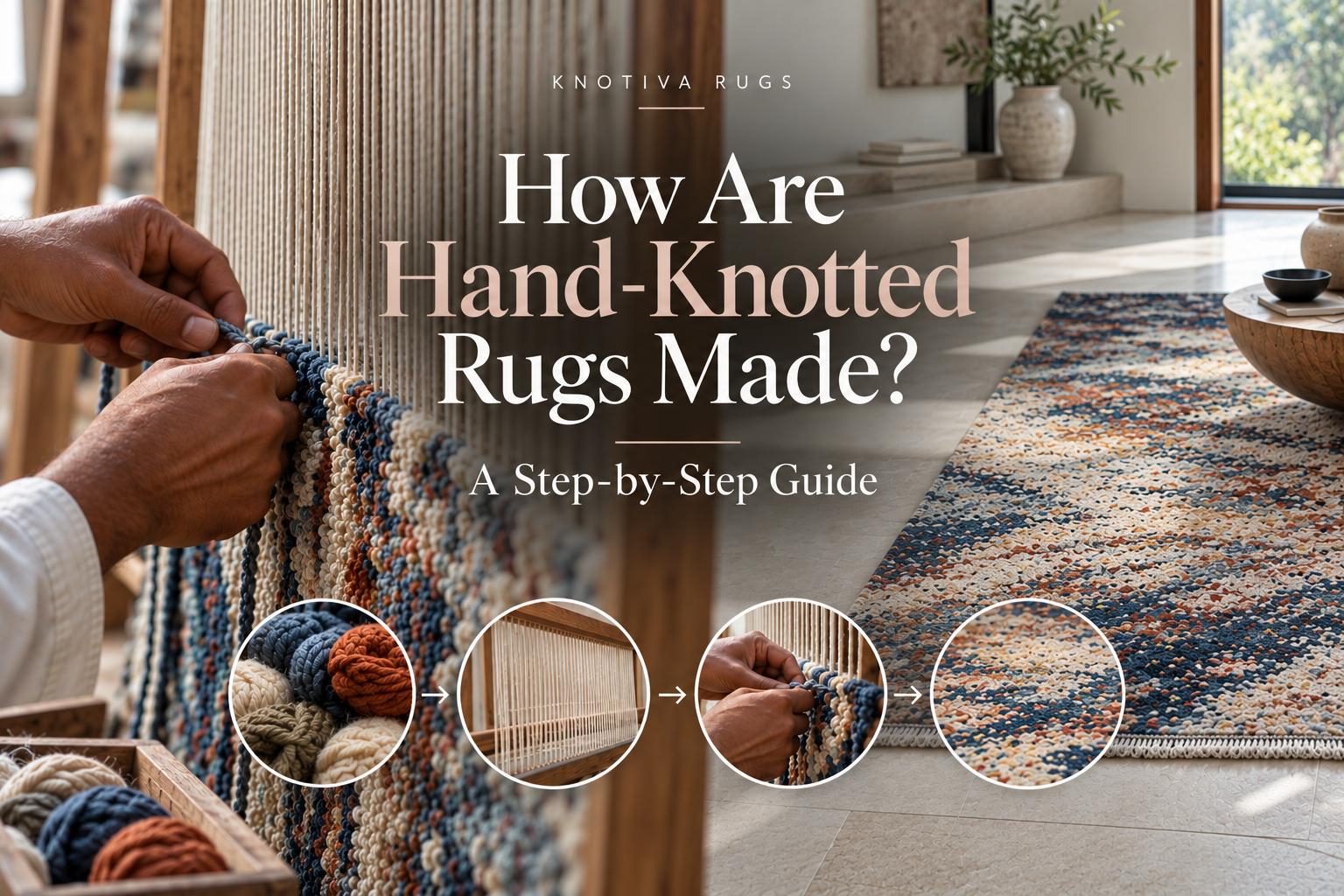
Have you ever wondered what goes into making a hand-knotted rug?
Unlike machine-made rugs, hand knotted rugs are created through a detailed weaving process in which skilled artisans tie individual knots onto a loom. Depending on the size, design and knot density, completing a single rug can take several months or longer.
Understanding how hand knotted rugs are made reveals the craftsmanship, patience and skill behind these beautiful pieces.
Let’s explore the journey from yarn to finished rug.
Step 1: Creating the Rug Design
Every hand knotted rug begins with a design.
Artisans work from a pattern that determines the rug’s colours, motifs, proportions and overall appearance.
Designs may feature traditional floral patterns, intricate geometric shapes or modern abstract compositions. A detailed design plan guides the weaver throughout the rug-making process.
Step 2: Selecting the Right Materials
The materials used in a hand knotted rug influence its texture, appearance and durability.
Common materials include:
- Wool: Valued for its resilience, warmth and natural texture.
- Silk: Known for its softness, lustre and ability to highlight fine details.
- Wool-Silk Blends: Combine the characteristics of both fibres to create visual and textural contrast.
The choice of material depends on the desired finish, design and intended use.
Step 3: Preparing and Dyeing the Yarn
Before weaving begins, the yarn is prepared and coloured according to the rug’s design. Depending on the production method, yarn may be spun, washed and dyed to achieve the required shades. Careful colour selection is essential, especially for rugs featuring detailed patterns or subtle tonal variations.
Once prepared, the yarn is ready for weaving.
Step 4: Setting Up the Loom
A loom provides the structure needed to create a hand knotted rug. Vertical threads, known as warp threads, are stretched across the loom to form the foundation. These threads must maintain consistent tension to help the rug retain its shape.
Horizontal threads, called weft threads, are added during weaving to secure the rows of knots.
Step 5: Hand Knotting the Rug
This is the most important and time-consuming stage. Artisans tie individual knots around the warp threads, following the rug’s design one row at a time. After completing a row, weft threads are inserted and compacted to strengthen the structure. A rug may contain hundreds of thousands or even millions of knots, depending on its dimensions and construction. This individual knotting process is what distinguishes a genuine hand knotted rug.
Step 6: Washing and Drying
Once the weaving is complete, the rug is removed from the loom. It is carefully washed to remove loose fibres and residue accumulated during production. Washing also helps reveal the final appearance of the colours and texture. The rug is then dried and, where necessary, stretched to maintain its intended dimensions.
Step 7: Trimming and Finishing
The rug’s surface is carefully trimmed to achieve the desired pile height. Artisans also finish the edges and secure the fringe to protect the rug’s structure. Some designs receive additional finishing to highlight patterns or create textural definition.
Finally, the rug is inspected for consistency, appearance and construction quality.
Why Does the Hand Knotting Process Matter?
The time and skill involved in hand knotting contribute significantly to a rug’s value. Every stage requires attention to detail, from material selection to the final finishing touches. With appropriate care, a well-made hand knotted rug can remain a beautiful part of a home for many years.
Discover the Beauty of Hand Knotted Rugs
A hand knotted rug is more than a decorative accessory. It represents a combination of design, materials and skilled craftsmanship.
At Knotiva Rugs, our collection celebrates the beauty of hand knotted designs, bringing texture, character and timeless appeal into contemporary homes. Explore Knotiva’s hand knotted rug collection and discover the details that make each design special.